Audit Trails for Credential Usage in Agent Sessions
Tracking what agents do with credentials is now a regulatory requirement, not a security luxury.
Audit trails for credential usage in agent sessions have quietly become the difference between an agent that's safe to run in production and one that's a liability wearing a demo. The core claim here isn't complicated: an audit trail has to capture not just that a credential was used, but when it was minted, what it was scoped to, and when it got revoked. Without that, an agent's actions become unattributable, its incidents become undebuggable, and its regulatory posture becomes indefensible, no matter how well it performs.
Agents no longer complete a single line of code and wait for a human to hit tab. They execute multi-step plans, call tools in sequence, delegate to sub-agents, and write directly to production systems, often with no person reviewing each individual action before it happens. Traditional logging was built for a world where a human took one discrete action at a time: timestamp, actor, resource, outcome. That schema holds up fine when a person clicks a button. It falls apart the moment an agent chains twelve tool calls together on behalf of a delegation nobody explicitly logged.
Standard server logs will tell you an API call occurred. The miniOrange analysis of agent log gaps found that standard logs won't tell you why the agent picked that call over the other plausible ones available to it in that moment. And a compliant outcome reached through a non-compliant path is still a regulatory problem, not a technicality to wave off. If an agent lands on the right answer by taking an unauthorized route to get there, the audit trail needs to show that route, or the organization has no way of knowing it happened until it happens again with a worse outcome attached. Engineering teams moving agents off a laptop and into production inherit this visibility gap by default. Nobody has to build it in. It's already there, waiting, unless someone designs against it on purpose.
How agents break the identity assumptions audit trails were built on
The Okta Enterprise AI Index, drawing on sign-on data across more than 20,000 organizations and over 100 AI products, found that organizations tend to default to three identity patterns when they stand up agents, and all three quietly corrode the audit trail.
Service accounts get provisioned once, granted broad access up front, and never revisited as an agent's actual scope of work expands. The log ends up describing the account rather than the work the account is doing. Static API keys are worse: they don't expire, they don't rotate, and they have a habit of ending up copied into config files or, more troublingly, into an agent's context window, where they can be exposed or exfiltrated without anyone noticing until much later. Shared human logins collapse the distinction between person and process. The log shows an employee's name attached to actions that employee never took, which means the audit trail is actively lying about who did what.
The consequence appears during incident review, which is the worst possible time to discover it. When an agent authenticates as a person rather than as itself, reconstructing what actually happened, step by step, becomes close to impossible. Machine identities already outnumber human ones by a wide margin, with CyberArk's 2025 survey putting the ratio at 82 to 1, and AI agents sit as a harder-to-govern subset within that population, frequently absent from the service account registry.
Agents also have a lifecycle problem that static provisioning wasn't built to handle. An agent spins up in response to a user request, runs through a workflow, and terminates. Security practitioners broadly argue that this ephemerality demands just-in-time provisioning and automatic credential expiration, a principle that governance frameworks are increasingly articulating. Most organizations do the opposite: they provision agent credentials once, at deployment, and never touch them again. OWASP's Top 10 for Agentic Applications 2026, published in December 2025, gives this failure mode a name: ASI03, Identity and Privilege Abuse, where privileges inherited from a human session get reused, escalated, or passed silently across agents that were never meant to have them.
The failure compounds in multi-agent chains. An orchestrator hands off to a specialist agent, which calls a tool, which writes to a database. If every hop in that chain runs under the same shared key, accountability for any single action in the chain simply disappears. Nobody did it. Everybody did it. The log can't tell the difference.
The deployment gap that makes this urgent right now
Adoption has sprinted well ahead of governance, and the gap between the two is where most of the real risk currently lives. Cisco reported at RSA Conference 2026 that 85% of surveyed major enterprise customers were experimenting with AI agents, but only 5% had actually moved them into production. That's nearly the entire population sitting in pilot purgatory, far more than a small gap. That's nearly the entire population sitting in pilot purgatory.
Gravitee's 2026 State of AI Agent Security report sharpens the picture further: 80.9% of technical teams were already testing or running agents, while only 14.4% of organizations had full IT and security approval covering their entire agent fleet. Most of what's running is running without complete sign-off. The same research picture suggests that agents are already touching production systems while the governance program meant to oversee them is still being drafted in a conference room somewhere.
The bottleneck isn't model quality. The research shows that most agent pilots never make it to production, and the reason is almost always deployment infrastructure: isolation, governance, compliance controls, data residency. Not accuracy. Not capability. Infrastructure.
Connect that back to credentials specifically, and the problem gets starker. When an agent is operating outside the known inventory, no credential usage log exists for it, since nobody registered it to begin with. That's an absent audit trail, not merely an incomplete one. That's an absent one. This scale of ungoverned agent activity is what regulators started noticing, which is why 2026 is the year the compliance clock started running.
What the regulatory frameworks now require from agent logs
Most of the EU AI Act's substantive rules entered application in 2026, though the high-risk system requirements under Annex III have a later application date. Article 12 of Regulation 2024/1689 requires that high-risk AI systems technically allow for automatic recording of events across the system's lifetime, with logging capabilities intended to enable traceability of the system's functioning and support ongoing monitoring of operation. Agents deployed in hiring, credit decisions, regulated reporting, public services, or critical infrastructure fall squarely into the high-risk category, and the evidentiary burden applies even before an organization has finished formally classifying the system. Some application dates under Regulation (EU) 2026/1744 stretch into 2027 and 2028, so compliance teams should treat this as active legal terrain rather than a settled checklist, and confirm specifics with counsel rather than relying on any single summary.
HIPAA, GDPR, and SOC 2 all converge on the same underlying requirement: connecting an AI system's actions back to an authenticated human user. Knowing that someone accessed patient data through an AI system means capturing that person's identity at the moment of access, rather than only logging the service account the call happened to route through.
A more specific standard is starting to take shape. IETF draft-sharif-agent-audit-trail-04 specifies a JSON-based Agent Audit Trail format with mandatory fields covering agent identity, action classification, outcome tracking, and trust level reporting. Records chain together using tamper-evident SHA-256 hashing per RFC 8785, with optional digital signatures, and the -04 revision adds post-quantum signature support via ML-DSA-65 under FIPS 204, plus optional Merkle batch anchoring using the RFC 6962 construction for compact inclusion proofs at high throughput. It maps informatively to SOC 2 Trust Services Criteria, ISO/IEC 42001, ISO/IEC 24970, prEN 18229-1, and PCI DSS v4.0.1. It handles privacy through input and output hashing, content fingerprinting, and tombstone-based deletion compatible with GDPR Article 17.
The draft has no formal IETF standing yet, and it's still just one individual's proposal working through the process. But its existence matters on its own terms: it signals that the absence of any real standard for how autonomous agents should log their own behavior is starting to close, not staying open indefinitely.
There's an organizational signal running alongside the regulatory one. The IBM Institute for Business Value reports that 76% of surveyed organizations now have a Chief AI Officer, up from 26% in 2025. The role in 2026 is increasingly defined by owning the agent registry, setting delegation authority policy, and leading incident response when an agent causes harm, rather than sitting somewhere adjacent to the AI strategy conversation.
What a credential audit trail for agent sessions must capture
Guardrails and audit trails solve different problems, and conflating them is a common mistake. A guardrail intercepts and blocks in the moment, before an action happens. An audit trail operates across the entire lifecycle and makes accountability possible after the fact. Both are necessary. Neither substitutes for the other.
Drawing on Superblocks' compliance guide and the Kontext analysis, a complete audit trail for an agent session needs to capture roughly seven categories of information. Requester identity comes first: authenticated user ID, session ID, source IP, tenant, the role that user held at the time of the request, and the application or endpoint that originated the call. Model identity follows: model name, version, deployment endpoint, and the specific fine-tuning or system prompt configuration in play, because the system prompt version determines what the model was actually instructed to do.
Intermediate tool calls that go unlogged remove the steps most likely to reveal how a decision was actually made, yet teams frequently truncate long outputs to save on storage cost, and the steps they cut are usually the ones mo... Every tool call in an agentic workflow deserves logging, not just the final response, yet teams frequently truncate long outputs to save on storage cost, and the steps they cut are usually the ones most relevant to debugging and compliance. The full agent action record needs to tie together the delegated user, the agent's identity, the tool it called, the resource it touched, the action taken, the parameters passed, the policy version in force, the requested scope, the decision made, the reasoning behind it, the approval state, and the downstream result. Human decisions belong in the record too: every approval, rejection, edit, and manual override, along with the elapsed time between an AI suggestion and the human's response to it.
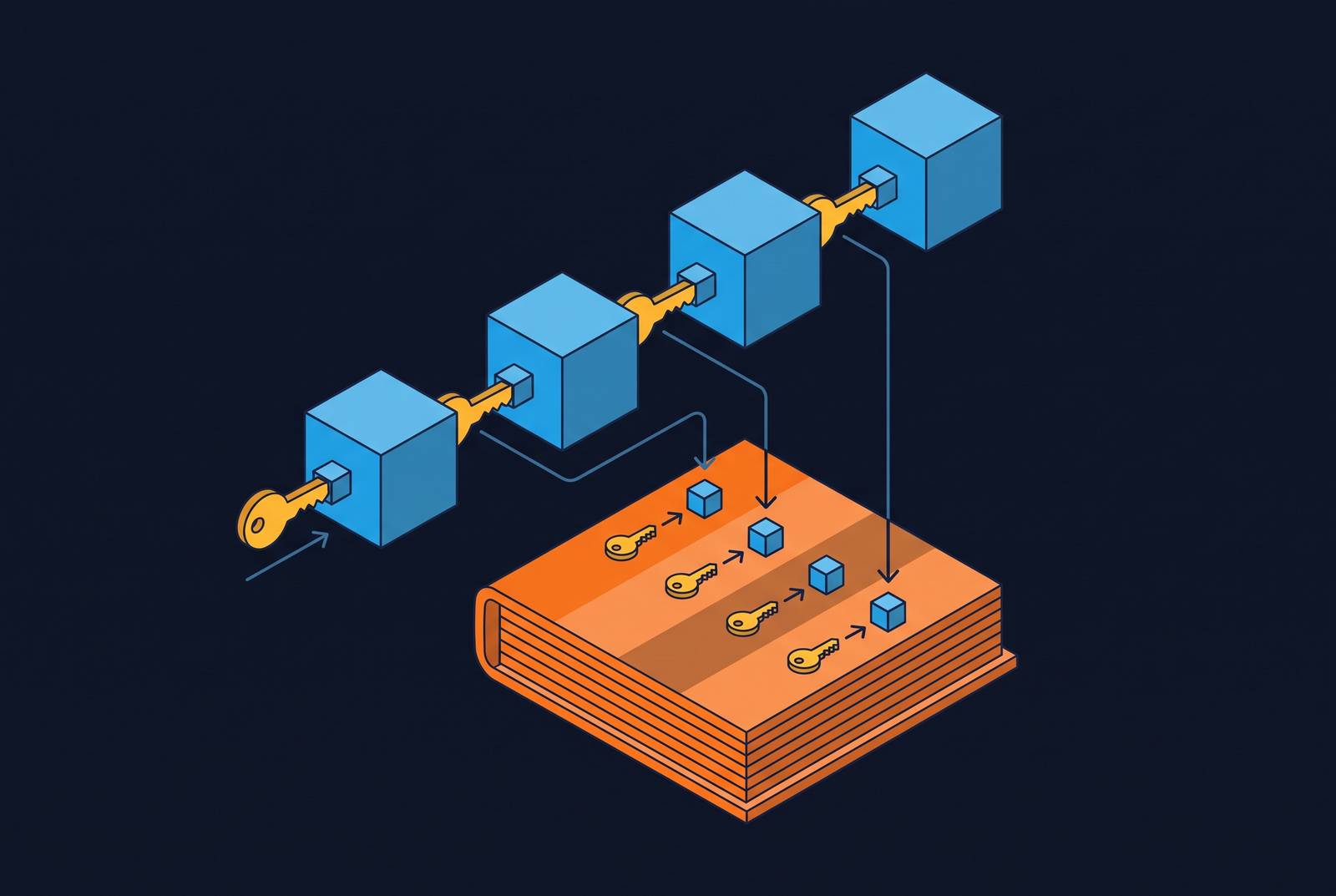
Credential events deserve their own line item, and this is the category most logs quietly skip. Which credentials got issued, to which agent, scoped to what, minted when, and revoked when, needs to be tracked as distinct from the human user's own credential record. Most existing logs capture the API key or service account that called the model while missing both the human upstream who initiated the delegation and the per-session scoping downstream. The chain of identity, from the delegating human through the agent to the specific credential and its expiry, has to stay intact end to end, or the record breaks exactly where it matters most.
Policy decisions round out the seven: not just what the agent did, but whether each action was actually approved under policy, and which rule approved it. A compliant action reached through a non-compliant approval path is still a finding waiting to happen.
The IETF draft's -01 revision added pre-execution recording as a requirement. Intent and planned action should be logged before execution, not only after, so a record survives even if the session terminates abnormally partway through. That broader idea is the decision trace: trigger and intent, the chain-of-thought or planning steps behind the action, the tool and API calls with exact parameters and responses, the context window payload including whatever governance instructions or user attributes got injected into the model, and finally the output itself. Skipping the earlier stages leaves the output record showing only a fraction of what actually happened.
Why credential minting and revocation deserve their own log layer
The architectural principle here is straightforward to state and hard to implement: every agent session should run on a credential minted specifically for that session, scoped to the minimum permissions the session's tasks actually require, and revoked automatically the moment the session ends.
Static credentials break that principle in several distinct ways. A static key reused across many sessions can't be tied back to any single user, request, or business justification once something goes wrong and someone goes looking. Once a key exists in more than one place, config files, environment variables, an agent's context window, "who has access to this" stops being a question anyone can answer with confidence. And if that key ends up copied into a prompt or a context window, it can be exposed, logged by some downstream system, or exfiltrated entirely, often without the issuing organization noticing until well after the fact.
A credential event log entry, to be worth anything, needs to record the credential's identifier, the principal that issued it, the agent identity it was issued to, its scope, the time it was minted, the time it was meant to expire, the time it was actually revoked, and the policy that authorized issuing it. That's not a small amount of metadata, but skipping any one of those fields leaves a gap an investigator will eventually fall into.
The Cloud Security Alliance's framework is blunt about the lifecycle point: ephemerality demands just-in-time provisioning. Credentials minted once at deployment and left untouched are a governance anti-pattern, full stop, even when they were scoped correctly at the exact moment they were created. Scope decays. Deployment-time correctness doesn't survive contact with a changing production environment.
Runtime authorization is where this actually gets enforced in practice. The goal of this approach is to evaluate each sensitive action before it executes and issue a short-lived, scoped credential only once policy has approved the specific combination of user, agent, tool, resource, action, and task context in play. That's the layer where credential logs and policy logs converge into one coherent record, rather than living in two systems that never talk to each other.
None of this replaces behavioral verification, though. A credential that was legitimately issued and correctly scoped, but wielded by an agent that's been compromised or manipulated, is still a security event. The log will show a valid, properly scoped credential being used exactly as intended, which is precisely the problem: without credential isolation at the session level, an attacker who manipulates an agent's context through indirect prompt injection can get that agent to misuse a perfectly legitimate credential, and the resulting log entry will look completely clean. That's the confused deputy problem in agentic form, and it's a strong argument for treating credential logs as necessary but not sufficient on their own.
How observability tooling handles, and often misses, the credential layer
The market building tools for this problem is large and growing fast. moderndata101.com projects LLM observability platforms will grow at a 36.3% compound annual growth rate through 2026, expanding several times over by 2030. That's a category that's clearly found real demand.
Leading platforms in 2026, including Opik by Comet, Langfuse, LangSmith, Arize Phoenix and Arize AX, Braintrust, Datadog LLM Observability, MLflow, Galileo, Fiddler, and Raindrop, generally do a solid job of showing multi-agent workflows as one coherent, nested trace: each agent, each sub-agent, each tool call, each retrieval, each LLM call, all stitched together so an engineer can actually follow what happened. What most of them don't cover, at least not as a first-class part of the trace model, is the credential lifecycle itself. Which specific credential was used, whether it was minted fresh for that session or inherited from some persistent service account sitting around from months ago, what scope it carried, whether it got revoked cleanly on completion: capturing that information in the trace is the exception rather than the rule.
AgentOps takes a different angle, offering local-first observability with passive hooks, privacy scrubbing, and live streaming built for unattended agents, which supports retrospective debugging without requiring any changes to the agent's own code. That's genuinely useful for teams running agents in sandboxed or air-gapped settings. Credential lifecycle logging still isn't its central focus, though, and that gap tends to recur across the category rather than being unique to any one tool.
There's a structural shift underway that could close this gap over time. Observability architecture in 2026 is moving toward telemetry approaches that extend tracing to cover non-deterministic, multi-step agent behavior. That standardization creates real room to carry credential events as structured spans inside the same trace, rather than stranding them in a separate system nobody cross-references during an incident.
McKinsey's State of AI trust research names security and risk concerns as a leading barrier standing between organizations and scaled agentic AI. Read alongside the deployment numbers cited earlier, the implication is direct: teams aren't stuck in pilot because their agents perform poorly. They're stuck because nobody can show an auditor or an incident responder what happened. SANS 2026 survey data reinforces the point from the control side: only a minority of organizations report comprehensive safeguards covering their agent fleets. Most teams layer multiple controls together, and even that combination doesn't fully cover the credential lifecycle on its own.
What managed infrastructure for agent sessions changes about the audit trail
Running a coding agent on a laptop and running that same agent against production infrastructure are not the same engineering problem, even though they can look identical from the outside. On a laptop, a leaked key is an inconvenience. In production, a static credential copied into an agent's context window is a live exposure sitting on a system that might touch customer data, financial records, or infrastructure controls.
Managed infrastructure for agent sessions shifts where credential minting, scoping, and revocation actually happen, moving them out of ad hoc scripts and config files and into a layer built specifically to issue short-lived, purpose-scoped credentials per session and tear them down automatically once the session ends. That's the architectural answer to the ephemerality that the Cloud Security Alliance's framework describes: instead of provisioning once at deployment and hoping nobody has to revisit it, the credential's entire lifecycle, mint, scope, use, revoke, becomes a single traceable event rather than four separate facts scattered across four different systems that don't talk to each other.
The result isn't a guarantee against misuse. Nothing is. But it does mean the audit trail has something real to point to: a specific credential, tied to a specific session, scoped to a specific set of permissions, with a start time and an end time that actually match what happened. Regulators, incident responders, and engineering teams debugging a 2 a.m. production issue are all, in the end, asking the same question: what happened here, and who or what is accountable for it. An audit trail that captures the credential layer, not just the API call that used it, is the only version of that answer that actually holds up under scrutiny.
Sources
- AI Agent Audit Trails Explained: The Missing Layer of Enterprise AI Governance
- AI Agents and Compliance: What Security Teams Need to Know in 2026
- AI Agents Are Still Logging In as Humans – and Your Audit Trail Is Paying for It
- Agent Audit Trail: A Standard Logging Format for Autonomous AI Systems
- Closing the AI agent identity governance gap
- AI Audit Trail: 7 Things to Log for Compliance in 2026 | Superblocks
- gravitee.io