Per-Session Sandbox Lifecycle Management at Scale
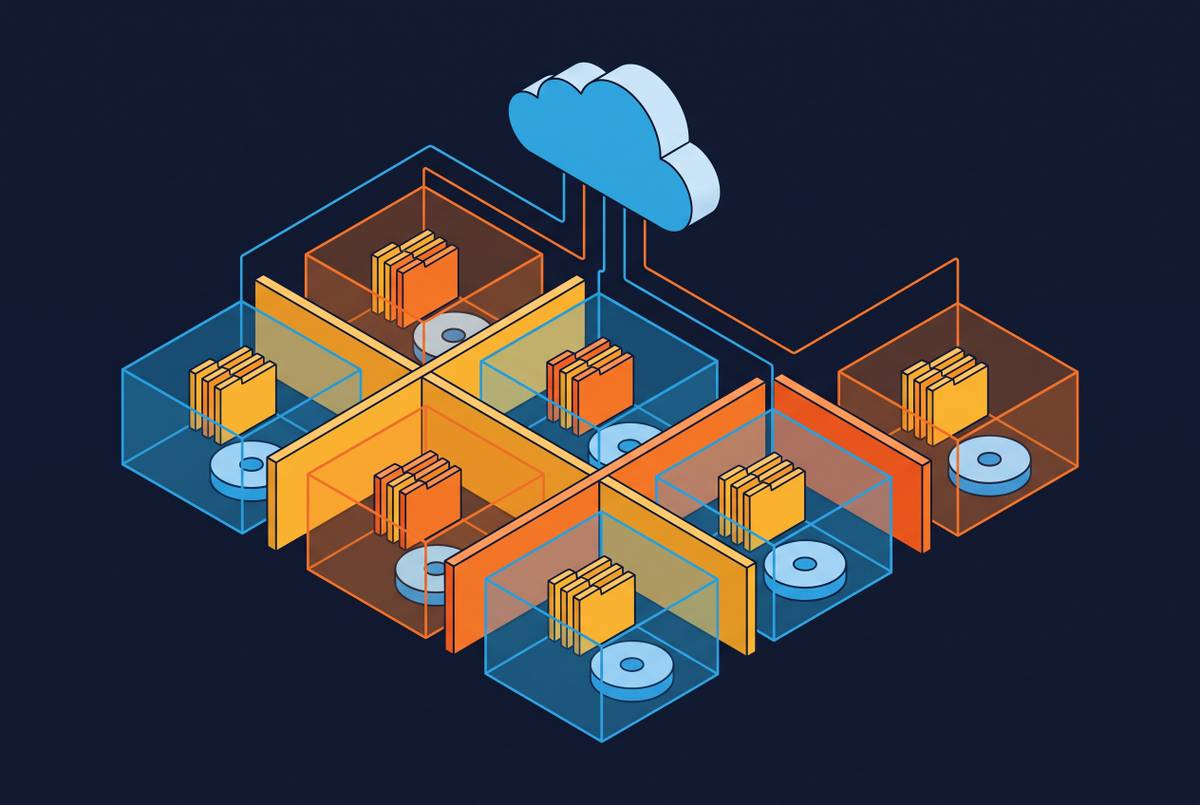
Session-specific credentials and ephemeral isolation are the two levers that actually scale.
What "session lifecycle" means for a coding agent
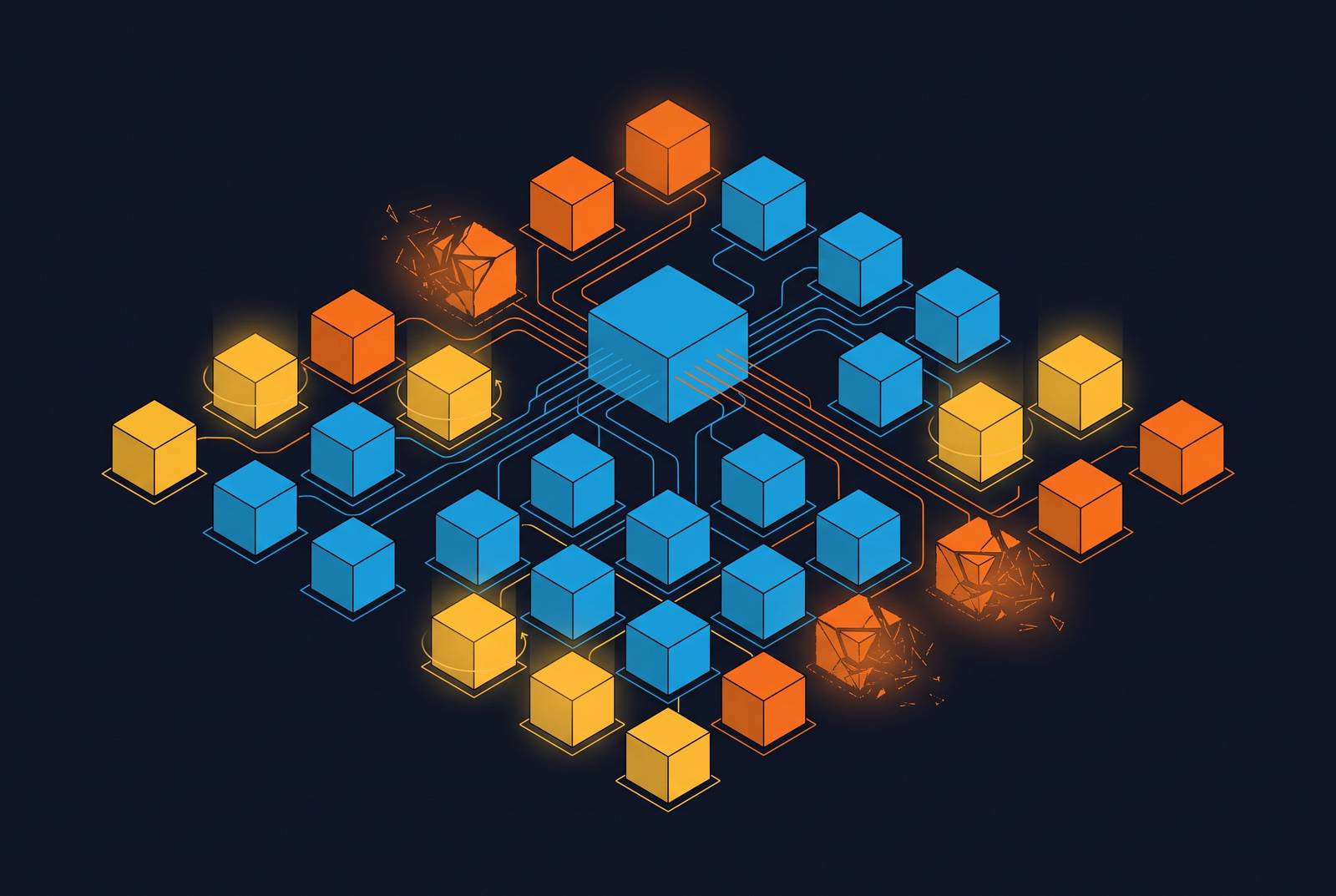
AI coding agents in 2026 don't autocomplete lines anymore. They own entire tasks: read the codebase, write the fix, run the tests, open the pull request, with no human checking each step along the way. Industry observers have noted billions of lines of AI-generated code shipping daily, and merge velocity at some organizations has reportedly climbed to levels once unimaginable for teams of their size. Nobody reads every diff at that volume. The unit that has to hold the line is the session itself, the sandbox an agent runs inside, from the moment it spins up to the moment it's torn down.
Creation, execution, and teardown are the three moments where security boundaries, cost commitments, and audit records get set, or get missed. Running the agent "in a container" and calling it a day does not hold up at scale. The blast radius of one bad session is a direct function of what credentials it holds, how long it stays alive, and what it can reach. That session might be misconfigured, hijacked, or just left running. As agent adoption accelerates across industries, deciding lifecycle policy on purpose, rather than inheriting whatever a platform's defaults happen to be, is the whole job now.
Creation covers environment provisioning, minting credentials, loading context. Execution is where the actual work happens: tool calls, code generation, test runs, file reads and writes. Teardown handles credential revocation, decides what happens to the state the agent produced, and closes out the bill. Each phase fails on its own terms, and the failures don't substitute for each other. A credential minted but never revoked is a teardown failure. A sandbox that lets state leak across tenants is a creation failure. An agent running with no CPU cap is an execution failure. Most of the incidents that should worry a team trace back to someone collapsing three distinct failure modes into one blob called "the sandbox," and that collapse is the actual root cause more often than any single bug.
Session length varies wildly, too. Triaging a failing test might take a few seconds. A multi-file migration can run for hours. A lifecycle model built around one of those cases only is a special case wearing a general one's clothes.
The bigger fork is stateful versus ephemeral, and here's where most teams get it backwards: they reach for stateful because rebuilding context feels wasteful, without pricing in what they're trading away. An ephemeral session starts clean every time, the simplest security story available, but it rebuilds context on every run, and that costs time. A stateful session keeps the filesystem, memory, and running processes alive across invocations, cutting rebuild cost but opening two risks in exchange: state that accumulates and quietly turns toxic, and a longer window where live credentials sit exposed. Stateful should be the exception a team argues its way into, an outcome earned by deliberate justification rather than a default fallen into.
Cost lives inside this same structure. Billing starts when the sandbox spins up and ends at teardown, and idle compute between tasks, the gap where nothing useful is happening but the meter's still running, is the single most common way spend gets away from a team.
Keep one more distinction straight: the session lifecycle is an infrastructure and governance concept. The agent's task loop is a model and orchestration concept that produces the reasoning and tool-calling sequence driving it. Most governance gaps trace straight back to a team treating those two as one thing when they're not.
Isolation architecture: why the choice of boundary technology determines what governance is even possible
Shared-kernel isolation carries a specific risk: container escape. CVE-2024-21626 showed that a compromised agent process can reach host infrastructure, including the host filesystem, when the isolation boundary is just namespaces and cgroups rather than a hardware-enforced wall. At multi-tenant scale, the risk surface grows with every additional tenant sharing that boundary.
NVIDIA's AI red team found that running LLM-generated code without real isolation can lead straight to remote code execution. Every line an agent produces has to be treated as potentially hostile, regardless of how harmless the prompt looked going in.
Two isolation models actually hold up in production, and they work on different principles. Firecracker microVMs give each workload its own kernel, a hardware-enforced boundary, with cold starts in the 100 to 125 millisecond range. gVisor and Kata Containers take a different route: gVisor intercepts syscalls in user space, Kata wraps the workload in a lightweight VM. Northflank runs more than 2 million isolated workloads a month on Kata and gVisor, which says something about how far that model scales under real load. Namespaces and cgroups alone don't belong in that conversation at all, whatever a quick prototype might get away with.
The isolation choice decides what the rest of the lifecycle can even attempt. Credential scoping only makes sense if the boundary actually holds: minting a session-specific token is safe when a microVM guarantees that token can't leak to the host or to a neighboring sandbox. Audit fidelity depends on a clean definition of "inside," something a shared-kernel runtime cannot give with full confidence. Snapshotting and suspend-resume are hypervisor primitives, so they don't exist as options at all unless the isolation layer supports them from the start.
Latency isn't a separate concern from security here, it's the same design decision viewed from a different angle. Real-time agents need responses under roughly 300 milliseconds to feel usable, and an unoptimized serverless cold start can run several seconds, a dealbreaker in that context. That's why warm pools and standby modes stop being an optimization and become a requirement for anything interactive. For platforms serving multiple tenants, the governance consequence is blunt: VM-backed execution is the only choice that keeps a kernel-level exploit from crossing tenant lines. A weaker isolation layer forecloses certain compliance postures before anyone writes a single policy, no matter how good that policy looks on paper.
Session creation: what must be established before a single tool call fires
Three things have to be nailed down, in order, before an agent touches anything. Environment comes first: the OS image, dependencies, repo clone, loaded context. How long that setup takes sets the clock on time-to-first-useful-output directly. Identity comes second: who or what actually triggered this session, whether a specific developer, a schedule, or an API caller. That attribution chain is the spine of every audit record that follows it. Credentials come third, scoped and session-specific, minted fresh at creation, never a shared service-account key, never a long-lived secret sitting in an environment variable.
Minting fresh credentials at creation is what makes teardown mean anything at all. If every session gets its own token, revoking it at the end is one clean operation. Share credentials across sessions instead, and revocation turns into a coordination headache nobody wants to own, which usually means it just doesn't get done.
NIST's February 2026 concept paper on agent identity and authorization lays out an "agents-as-identities" principle: AI agents need the same access controls and audit trails as human users. That means session credentials tied to a properly attributed identity, not just a shared API key passed around informally.
Cold start latency shapes creation directly, since the gap between requesting a sandbox and having a working environment is exactly when the agent sits idle, burning nothing but time. Firecracker runs around 100 to 125 milliseconds. Blaxel claims sub-25-millisecond resume from standby. Daytona claims sub-90-millisecond creation. None of those numbers matter in isolation. What matters is whether a team picks pre-warmed pools or standby reuse against its own latency budget, instead of defaulting to whatever a platform ships with out of the box.
Defining the sandbox environment as code, a YAML file or similar checked into the repository, turns creation into something versioned and reviewable before a session ever runs. That's the line between a one-off agent experiment and a workflow a compliance team can actually sign off on.
"Clean start" has a precise operational meaning: no inherited filesystem state, no leftover credentials from a previous session, no warm cache carrying data across tenant lines. Creation is the only point in the lifecycle where that guarantee can be made at all. Miss it here, and there's no fixing it downstream, no matter how tight execution or teardown ends up being.
Execution phase controls: resource limits, network policy, and the agent's actual reach
Resource limits belong at the front of the design, set before a runaway session blows through a budget. Hard caps on CPU, memory, and network bandwidth stop a runaway loop from eating unbounded compute, and that's a cost control and an availability safeguard at the same time, not two separate concerns. Budget caps set at the session level mean one badly configured task can't burn through a team's entire monthly LLM spend on its own.
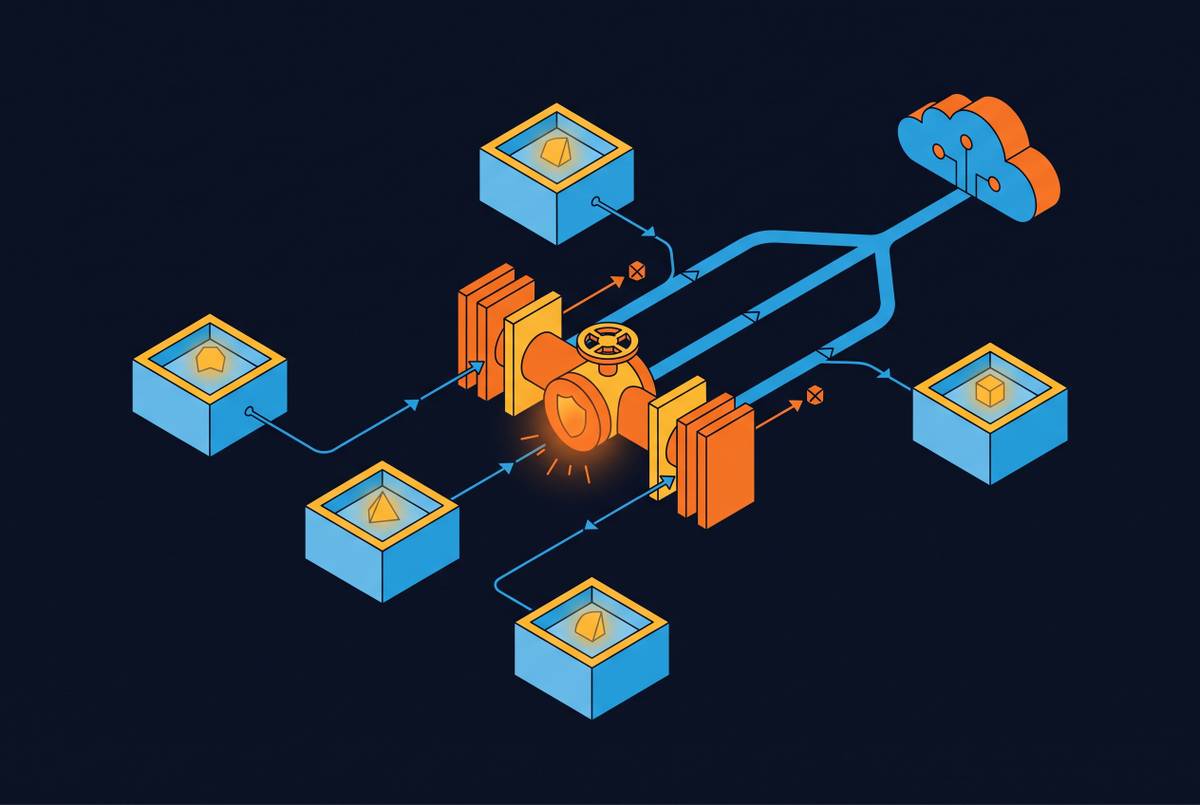
Network policy deserves the same rigor, arguably more. The sandbox should only reach destinations approved ahead of time, nothing discovered on the fly. Outbound egress controls stop a compromised or manipulated agent from exfiltrating data, and this matters specifically because prompt injection attacks that try to smuggle data out over the network get neutralized by egress filtering at the system level. Filtering at the application layer alone isn't enough, since malicious code and legitimate code often look identical to whatever's inspecting them.
Filesystem access needs the same scoping, no exceptions. An agent debugging one service should see that service's source and nothing past it: no unrelated repos, no SSH keys, no production config sitting one directory over. That has to be enforced at the sandbox boundary itself.
Every tool call, every file write, every outbound API request during execution should throw off a log entry. That's the raw material for the audit trail, and it's the only way to reconstruct what actually happened when an agent produces something nobody expected.
High-stakes moves, merging to main, deploying to production, touching secrets, should stop the execution phase and wait for a human to confirm rather than plow ahead unattended. Field research covering 13 developers alongside a 99-respondent survey found that experienced developers actively supervise their agents instead of letting them run fully unattended, especially around core business logic. Speed is not worth trading away against that judgment, and any team that does is making a bet the research doesn't support.
Long-running sessions accumulate state as they go: crawled data, intermediate files, a growing conversation history. That's productive state, the kind the agent actually needs to keep working. But it also means the environment gets more sensitive the longer the session runs. The isolation boundary matters more at hour six than it did at minute one, and treating hour six like minute one is exactly where things go wrong.
Standby and suspend modes: managing the gap between task bursts without paying for idle compute
Dead time is usually the expensive part. An agent that only fires when a PR opens, or a CI job fails, or a schedule ticks over spends most of its life waiting, and billing that wait like active compute is where budgets quietly bleed out.
Standby exists as its own lifecycle state, distinct from running and from fully terminated. The sandbox hibernates, filesystem and memory intact. Billing drops from compute pricing to snapshot storage only, and resume brings the environment back without paying the full cold-start cost a second time.
Platforms handle this differently enough that the choice changes which one fits a workload, not just the pricing footnote. Blaxel drops into standby automatically after 15 seconds of network inactivity and resumes in under 25 milliseconds, with standby itself costing nothing indefinitely. Daytona auto-stops after 15 minutes idle and auto-archives after 7 days stopped. Modal keeps filesystem snapshots for 30 days by default. Cloudflare Sandboxes clear state entirely on sleep and take 1 to 3 seconds to cold start back up. Four platforms, four different answers to the same question, and treating any one of them as a universal default is asking for a surprise on next month's invoice.
Standby raises a governance question most teams skip past entirely: a sandbox sitting in standby still holds state, and possibly still holds live credentials. Whether that's safe depends entirely on whether those credentials were scoped tightly to the session, or whether they persist across the standby window no matter how long it runs. That answer should not be left to a platform's defaults. It needs to be a decision a team makes on purpose and writes down somewhere.
Getting this wrong raises a cost later, not immediately. Sessions that persist context across repeated standby cycles build up crawled datasets, tuned parameters, long conversation histories. When the sandbox eventually expires or gets garbage-collected, all of that disappears, and someone ends up spending real engineering hours rebuilding context the agent had already produced once before. Standby policy, in other words, is a decision about how much institutional memory a team is willing to lose the day the cleanup job finally runs.
Teardown: credential revocation, state disposition, and closing the audit record
Teardown means more than deleting a container. It's three separate operations, and they run in a specific order, not whatever order happens to be convenient that day. Revoke the session-specific credentials first: anything minted at creation that survives past teardown is orphaned attack surface sitting on the network, waiting for someone who isn't supposed to be looking. Then decide what happens to the state, the filesystem, cached data, whatever artifacts the agent produced: retained for audit, exported somewhere durable, or destroyed. Finally, close the audit record, a complete, timestamped log of every tool call, every diff, every token, tied back to the identity that triggered the session in the first place.
A Dark Reading poll found that only 21% of executives report full visibility into what permissions their agents hold, what tools they used, or what data they touched. The teardown record is the main source of that visibility. A team without a defined teardown policy is, by definition, one of the majority operating blind.
At scale, teardown has to run automatically, full stop. A platform running thousands of concurrent sessions cannot rely on someone remembering to clean up by hand. Skip a teardown and three failures land at once from that single missed step: credentials stay live, the billing meter keeps running, and the audit trail comes up incomplete.
Data residency rules make this sharper still. GDPR, HIPAA, and PCI DSS each specify how long data may persist and how it has to be destroyed, and teardown is the phase where a team either meets those requirements or quietly violates them without noticing. The EU AI Act's traceability obligations stack another layer on top: the audit record teardown produces can't just be thrown away once the session ends.
Platform behavior can work against a team that isn't paying attention here, too. A policy of indefinite retention for paused sandboxes, with no automatic deletion, is a concrete example of a platform decision a team has to design around rather than assume away. State a team believes is persistent will eventually get destroyed by the platform's own rules, not by whatever cleanup logic the team wrote and forgot about.
For anyone answering to SOC 2, ISO 27001, or the EU AI Act, teardown completeness has to be an auditable property on its own: the record has to exist, carry a timestamp, and tie back to one specific session identity. Anything less is a gap that becomes visible during an audit, at the worst possible time.
Observability across the full session: what "full audit trail" requires
Observability for an agent is a governance primitive. It's the record of what the agent did, what it touched, what it decided, and what it cost to do it.
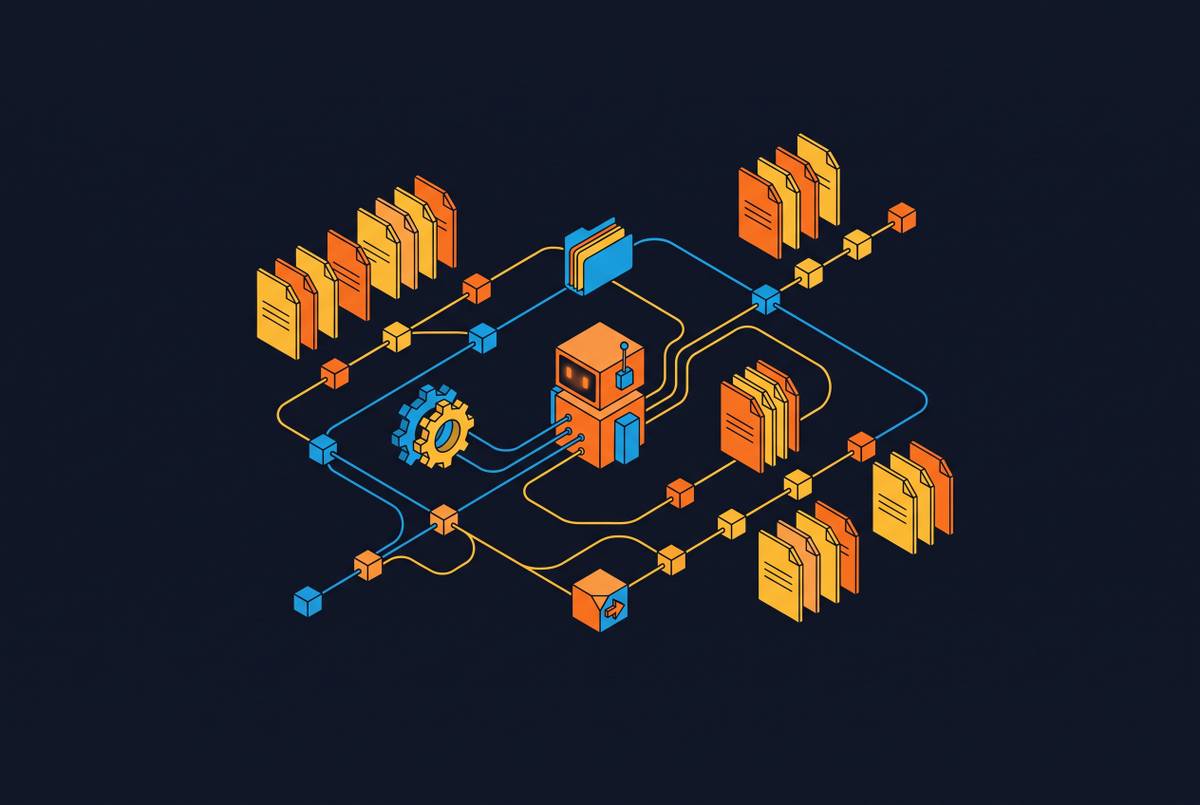
Four layers make up a session worth calling observable. Tool call logs capture every external API call, file operation, and shell command, each with a timestamp and the context that triggered it. Diff and artifact records track every file changed, every pull request opened, every test result, the output half of the trail. Token and cost accounting breaks down input and output tokens per session, per developer, per time window, available as a live control surface rather than a number that only shows up after the invoice lands. Identity and attribution ties the whole thing together: which developer, which trigger, which configuration version started this particular session.
NIST's AI Agent Standards Initiative, launched in February 2026, names agent security and identity as a core area. These are voluntary guidelines still taking shape, not finished standards, but the direction isn't really in question at this point.
The EU AI Act's risk-tiered obligations demand that same traceability, and manual compliance processes simply cannot keep pace with how fast agentic deployments are multiplying. Build the four-layer observability model into the session lifecycle now, and a team has an answer ready the day a regulator or an incident finally asks for one. Wait to retrofit it after that day arrives, and there won't be time to build it properly.